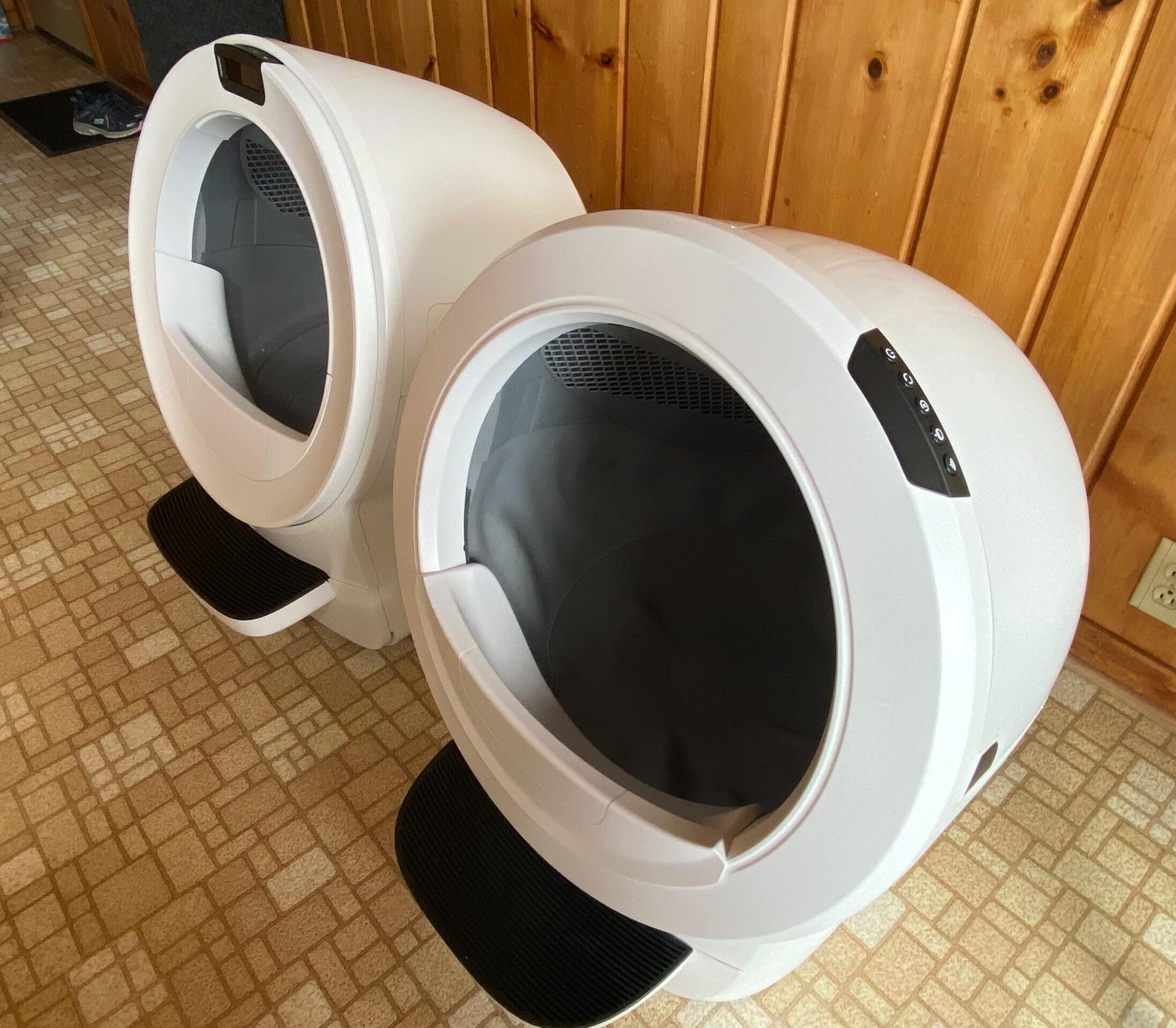
If you’re reading this, you’re probably past the research phase — and that’s exactly the stage I was working from as well. By that point, I was already familiar with the Litter-Robot platform and had spent enough time with different models to move beyond specs and first impressions.
Because of that, what I was left with was the harder part: understanding how each model actually fits into a real home, with a real cat, and a real day-to-day routine. That shift in perspective is what shaped how I evaluated both models in real life.
This is not a technical feature comparison. I already cover specs, sensors, and side-by-side differences in my full Litter-Robot 4 vs Litter-Robot 5 comparison. What follows is a decision-focused guide, building on real-life use, and centered on how these units fit into different environments, routines, and cat behaviors — the considerations that tend to matter most once technical differences are already understood.
Over time, what mattered more to me than specs was how the routine felt day after day.
At first, I honestly expected one model to clearly outperform the other — but that’s not how it played out in daily use. That doesn’t mean the differences don’t matter; it means which differences matter depends entirely on how you live and what you personally value.
Start With Your Home, Not the Machine
Rather than starting with the machines themselves, what became clear through real-world use is that the environment where the unit lives plays a much bigger role than people expect.
Climate
I’ve used both models in cold and temperate climates, as well as in hot and humid ones. One thing stood out very clearly: climate doesn’t change which model you choose, but it significantly changes how the unit needs to be managed.
Under normal, cooler conditions with one cat, I observed that the Litter-Robot 4 could comfortably go up to about seven days between drawer emptying. With the LR5, the larger waste capacity sometimes allowed that window to stretch closer to ten days — depending on litter choice, odor management, and routine.
Once heat and humidity enter the picture, odor buildup becomes the limiting factor, and both models need to be emptied more frequently, often alongside extra odor-control measures.
Location
In my case, both units were used in a laundry room, where airflow and temperature are fairly controlled. This setup made daily use predictable and easier to manage. In more enclosed spaces, location ends up influencing routine more than the specific model itself.
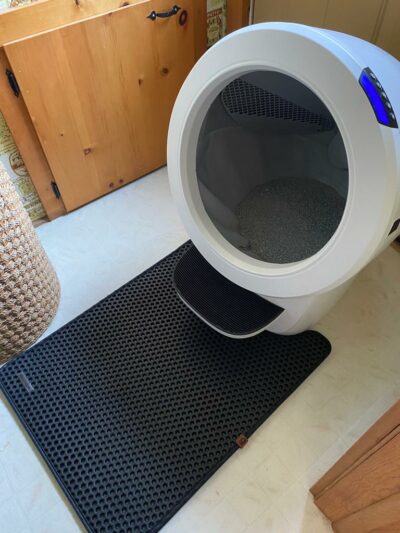
Floor type also matters. In homes with carpeted floors, the Litter-Robot 5 works properly without additional accessories, while the Litter-Robot 4 does not function correctly on carpet unless the Carpet Tray is used.
Personal Odor Sensitivity
I have a fairly normal sensitivity to odors, and even so, neither unit ever felt universally “odor-free.” One expectation that becomes important to reset is this: automatic litter boxes reduce daily scooping — they don’t eliminate odor physics.
Your Cat Changes the Decision More Than You Expect
Once the home is considered, the next — and often more decisive — factor is the cat.
Cat Profile
The cat in my household is small (around 7 lb), senior, and has been using Litter-Robot units since she was about ten months old. She’s sensitive to dirty litter and lingering odors, but she is not a high sprayer and doesn’t press against the walls of the unit when urinating.
Initial Preference vs Long-Term Use
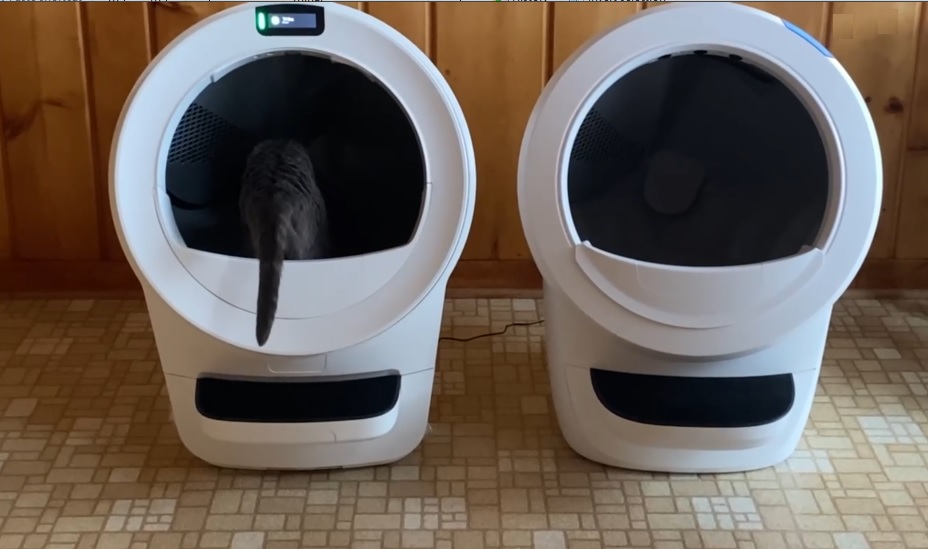
When I first placed the Litter-Robot 4 and Litter-Robot 5 side by side, she initially gravitated toward the Litter-Robot 5. That first preference was noticeable and consistent at the beginning.
Over time, however, that behavior evened out. Once both units became part of her normal environment, she continued using both interchangeably, without avoiding either one.
This experience reinforced something important: initial preference doesn’t always translate into long-term preference. Some cats react more strongly to novelty — changes in design, feedback, or how a unit presents itself at first — but once the environment becomes familiar, baseline habits tend to take over.
When the Cat Doesn’t Decide the Model
In practical terms, this meant that my cat’s behavior didn’t clearly favor one model over the other in long-term daily use. With cats that have similar profiles — moderate digging behavior, normal urination posture, and no wall-spraying tendencies — the choice between the Litter-Robot 4 and Litter-Robot 5 is rarely dictated by the cat itself.
In these cases, both models tend to be equally accepted, and the decision shifts toward owner priorities rather than feline behavior.
When the Cat Does Start to Matter
Cat behavior becomes more relevant with known high sprayers, cats that lean heavily against the walls, or cats with more extreme positioning habits. In those situations, differences between both models when it comes to waste port size and airflow can influence how easily the unit fits into the daily routine.
For cats like mine, adaptation happens quickly, and once novelty fades, the final decision is usually driven more by how the owner prefers to manage the unit than by how the cat interacts with it.
Day-to-Day Reality vs Occasional Maintenance
One of the biggest misunderstandings I see around automatic litter boxes is how maintenance actually works.
What Matters Day to Day
For me, the biggest quality-of-life improvement with both models was reducing direct contact with waste. Not having to scoop daily also reduced the physical strain that comes from constant bending and squatting over time.
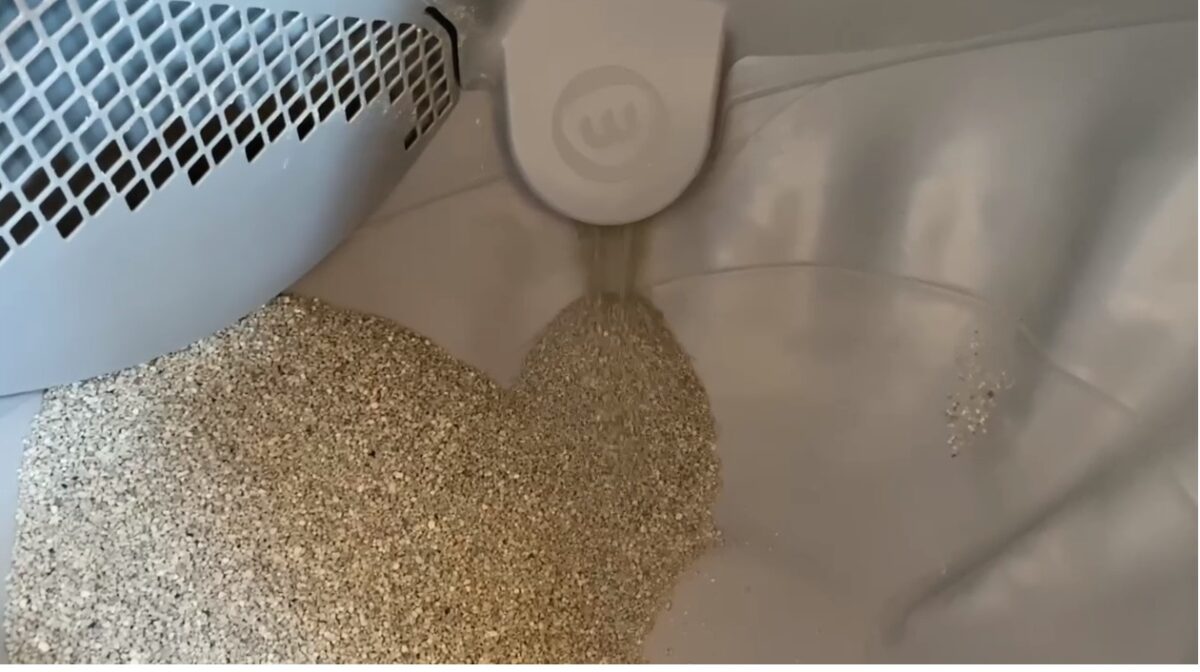
With the Litter-Robot 4 — especially when paired with the Litter Hopper — day-to-day involvement felt minimal. Litter levels stayed stable longer, and refilling the hopper became something I did occasionally rather than something I had to think about all the time.
Sensors and Real-Life Detection
Both the LR4 and LR5 rely on sensors to detect when a cat enters the unit. In real use, the LR4’s dual sensor system worked reliably, but like any sensor-based setup, it could occasionally be affected by dust or cat hair if I went too long without cleaning.
What I noticed with the LR5 is that the added front-facing lens changed how detection felt in everyday use. Even when dust or fur started to interfere with other sensors, that visual detection often still caught my cat entering. It didn’t remove the need for occasional cleaning on either model, but it added a layer of redundancy that felt reassuring over time. This was always a preventive task — not something I dealt with daily.
Odor and Moisture: What Actually Changes Over Time
Odor control is where expectations really need to stay grounded.
Opening the Drawer
With the Litter-Robot 4, I noticed that its more sealed design tends to concentrate odor and moisture inside the waste drawer over several days. As a result, odor feels more concentrated when the drawer is opened.
The Litter-Robot 5 handles moisture differently. Its wider waste port allows more airflow, which doesn’t eliminate odor, but changes how it behaves. Instead of remaining concentrated inside the drawer, odor tends to disperse more into the unit over time, making it feel less intense when opening the drawer.
Ambient Odor
Beyond what I noticed when opening the drawer, ambient odor showed up mainly as a room-level effect in hot and humid climates if the drawer wasn’t emptied more frequently.
With the Litter-Robot 4, odor tended to remain more contained within the unit itself. With the Litter-Robot 5, its more ventilated design sometimes allowed faint traces of odor to be noticeable in the surrounding space.
Neither model is odor-free under warm and humid conditions. The determining factor isn’t which unit smells more, but how often the drawer needs to be emptied when the climate doesn’t allow waste to sit for the manufacturer’s recommended timeframe.
Why Climate Affects the Routine More Than the Model
In colder and temperate climates, I found odor control to be broadly similar between the two models. Under those conditions, carbon filtration and normal drawer intervals played a more noticeable role, and neither unit required special adjustments beyond the standard routine.
In hot and humid climates, however, moisture management became the dominant factor shaping daily use. At that point, the limiting factor wasn’t the model itself, but how quickly moisture accumulated and how that interacted with the waste drawer over time.
From long-term use, what stood out to me wasn’t absolute odor control or which unit performed “better,” but how climate dictated the pace of maintenance. When moisture builds faster, routines naturally have to adapt — regardless of model.
In practice, both the Litter-Robot 4 and Litter-Robot 5 benefited equally from:
- more frequent drawer emptying
- appropriate litter choice
- deodorizer use
Under those conditions, routine mattered far more than the specific design differences between models.
Which Type of Owner Enjoys Each Model More
Both Models
Both the Litter-Robot 4 and 5 are a huge relief for anyone tired of scooping litter multiple times a day — especially if bending or squatting causes physical discomfort.
In terms of cleaning, both models are very similar. They disassemble in nearly the same way, and the overall cleaning process feels almost identical. The main practical difference is that on the Litter-Robot 5, the front display area stays protected from moisture, and the bonnet can be left hanging during disassembling, which makes the process feel slightly more convenient. In practice, though, both units require a very similar level of effort to keep clean.
Litter-Robot 4
From my experience, the LR4 tends to suit owners who value simplicity and minimal daily involvement. When paired with the Litter Hopper, it significantly reduced how often I had to think about refilling litter.
While it still requires periodic sensor cleaning, that always felt like an occasional preventive task rather than a frequent routine.
Litter-Robot 5
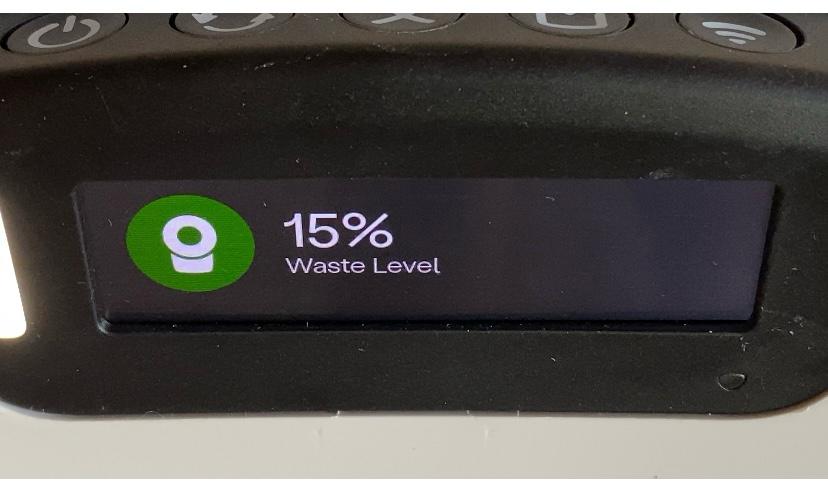
The LR5 felt better suited to owners who like detailed monitoring and clear feedback. Real-time data on cat activity and on-screen messages explaining what the unit is doing gave me more visibility into daily use.
The added front-facing lens also provided extra detection redundancy, which I appreciated in real-life conditions where dust or fur buildup happens over time. Its larger waste drawer and easier access to the globe made it especially practical in multi-cat setups.
Who May Find Each Model Frustrating
Litter-Robot 4
Some users may find that the bonnet takes a little more effort during setup and needs to be fully removed and placed on the floor when cleaning. It also provides less immediate visual feedback compared to models with a display.
Litter-Robot 5
In homes with known high sprayers, extra attention may be needed around the waste port area. This is driven by cat behavior and can happen with both models, but the LR5’s wider and slightly lower waste port opening can make it more noticeable.
This isn’t an issue that affects most cats. When it does come up, it’s generally manageable with straightforward preventive adjustments and doesn’t tend to be a deal-breaker for owners of high-spraying cats.
Final Decision Logic
If the goal is to avoid choosing the wrong model, I found the decision comes down to priorities rather than features.
Choose the Litter-Robot 4 if:
- simplicity is your main goal.
- you prefer minimal day-to-day interaction.
- your household has up to three or four cats (ideally three).
- reducing routine maintenance matters more than detailed feedback.
Choose the Litter-Robot 5 if:
- you want detailed monitoring of the unit and clearer troubleshooting feedback.
- you have multiple cats (up to five) or want easier access to the globe for cleaning.
- you value extra detection layers and more detailed insight into what happens during each visit, beyond simple usage counts.
Neither choice is wrong. The right model depends on how you live, how your cat behaves, and what you personally value once the specs stop mattering. If you decide that one of these models is the right fit for your home, you can check current pricing and availability directly through Whisker on this link.
Some content contains affiliate links or samples for reviews; I may receive compensation. Learn more

Leave a Reply